
Ballistic rubber testing is most useful when the results are tied to the actual ammunition, rubber construction and range assembly. Customer testing for a government project in July and October 2021 documented how CRS standard panels and Titan ballistic rubber products performed in several configurations. The findings include projectile capture, reduced exit velocity and exploratory high-energy pass-through results.
At Cumberland Rubber Supply, our priorities are range safety, ricochet mitigation, impact management and durability. This review explains what the customer reported, what those observations mean for a complete shooting-range system, and where further evaluation is needed. It is a record of specific tests—not an NIJ protection rating or approval of every installation.
Ballistic rubber range safety: ricochet mitigation and capture are different roles
CRS ballistic rubber is intended to help reduce ricochet as part of a properly designed shooting range. Encapsulation, or projectile capture, is an additional capability dependent on thickness, construction, ammunition and the complete assembly. Rubber does not have to be the final bullet-stopping layer to have a useful role in a range system.
Forward penetration through rubber is not by itself a failure of its assigned ricochet-mitigation role. However, the backstop, bullet trap or other containment structure must be appropriate for the ammunition and operating conditions. No ricochet was reported in the supplied July or October accounts. Because the records do not document a dedicated ricochet protocol or acceptance criteria, that observation is not presented as a verified anti-ricochet pass for every shot.
July 23, 2021: testing 2-inch ballistic rubber panels
The July work evaluated .223 Remington 55-grain FMJ and 9 mm 115-grain FMJ at a nominal distance of 21 feet. Associated order records identify both panel types as 2 × 24 × 24 inches. The standard panel was listed at 48 lb; the Titan panel at 60 lb. Titan construction is screen-reinforced. No embedded screen is documented for the standard sample, and the exact screen specification in the tested Titan sample remains unconfirmed.
The chronograph series compared separate control shots with a standard 2-inch panel and then a Titan panel ahead of a standard panel, giving 4 inches of combined rubber. The readings below are the averages reported by the customer. They are not measurements of the same bullet before and after impact.
| Round and configuration | Recorded velocities (n) | Average velocity (ft/s) | Source-listed energy (ft-lb) | Reported reduction: velocity / energy |
|---|---|---|---|---|
| .223 control | 10 | 2,992 | 1,094 | Baseline |
| .223 standard 2-inch panel | 10 | 2,923 | 1,044 | 2% / 5% |
| .223 Titan + standard, 4 inches total | 9 | 1,774 | 469 | 41% / 57% |
| 9 mm control | 10 | 1,319 | 444 | Baseline |
| 9 mm standard 2-inch panel | 10 | 1,218 | 379 | 8% / 15% |
| 9 mm Titan + standard, 4 inches total | 7 | 609 | 104 | 54% / 77% |
The combined-panel setup showed lower average exit velocities and source-listed energies for both ammunition types. That is a useful impact-management finding, even though the measured rounds exited. The reported reductions apply to the combined setup, not each panel individually. Energy values appear to use nominal bullet weights; recovered projectile mass was not verified. Blank chart cells are missing readings, not confirmed stops. Individual combined-panel exit velocities varied from 781 to 2,907 ft/s for .223 and 380 to 1,027 ft/s for 9 mm.

Wood-backed trials and concentrated shot distribution
Separate .223 trials recorded penetration through a standard panel backed by one wood layer, and through a standard panel backed by two staggered wood layers. With a Titan panel ahead of a standard panel and two wood layers behind them, the first shot did not penetrate the complete assembly. During concentrated fire into approximately a 3-inch area, the customer reported the first rear escape at round 28.
That result belongs to the complete rubber-and-wood assembly. It does not identify which layer stopped the earlier bullets, establish standalone 2-inch Titan capture, or provide a guaranteed shot-count limit. It illustrates why concentrated repeated impacts must be considered separately from distributed fire.
October 2021: Titan block testing with .308 and .50 BMG
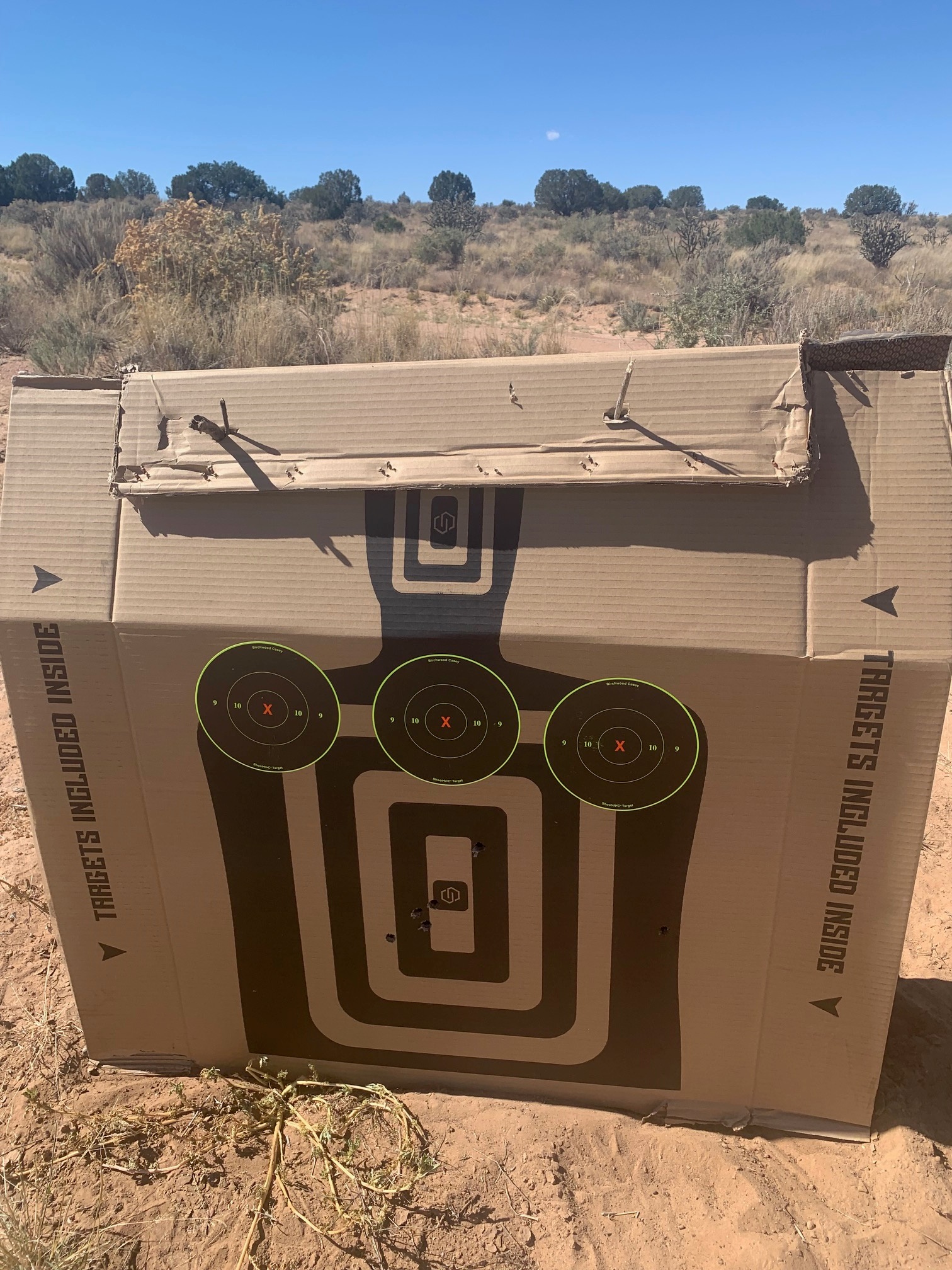
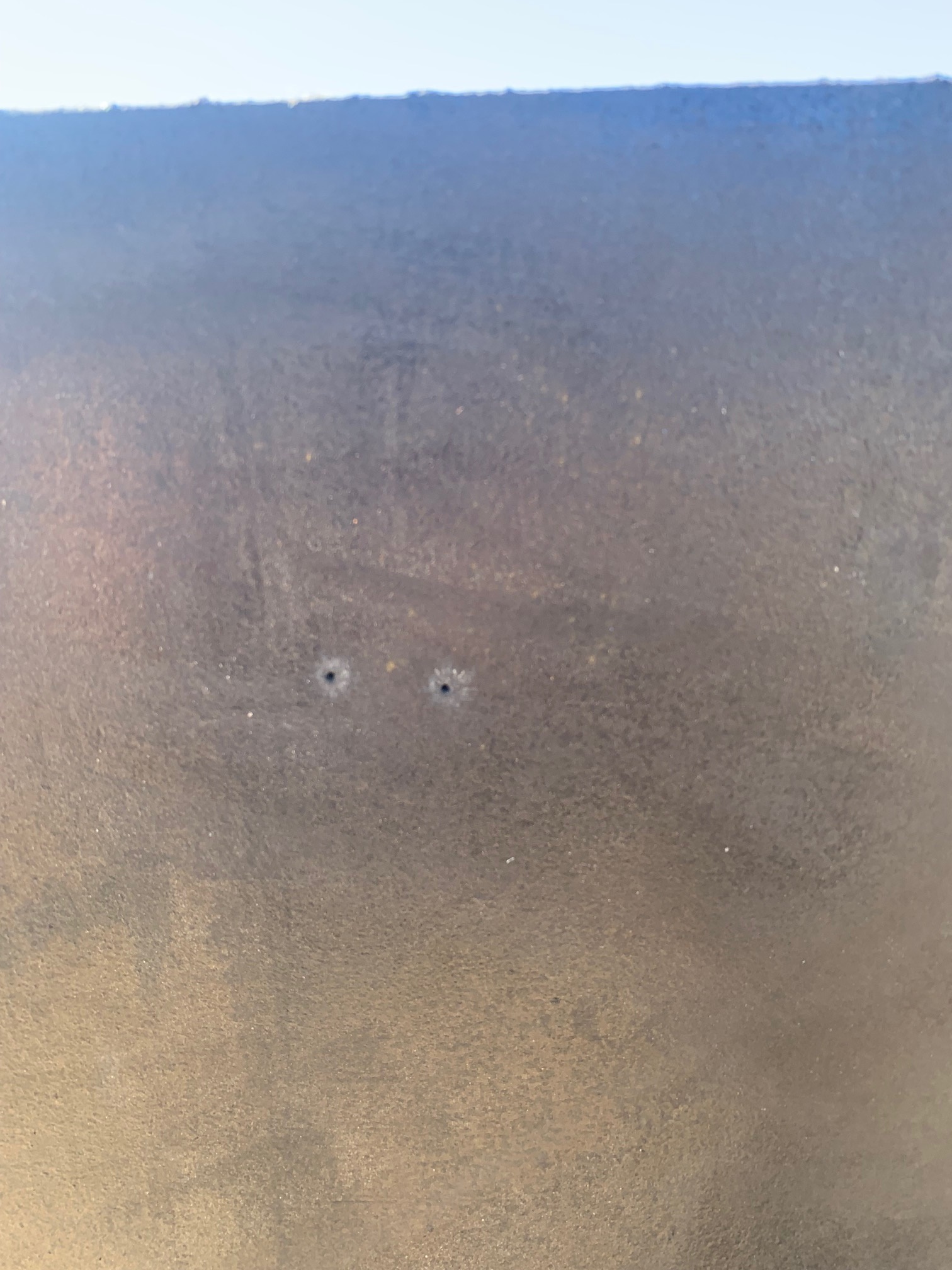
The October test used a 9 × 12 × 24-inch Titan Ballistic Block, listed at 112 lb and made from black modified vulcanized rubber with an embedded high-carbon screen. CRS confirmed that the rounds were fired through the 9-inch depth. Results were sent to CRS on October 18, 2021.
| Ammunition and firearm | Distance | Reported result |
|---|---|---|
| .308 Win, 168-grain HPBT; Savage 10BA | 100 yards | Two rounds stopped and encapsulated; no exits observed. |
| .50 BMG, 660-grain FMJ M33; Barrett 99 | 100 yards | One reported shot passed through the 9-inch depth, with rear-face tearing. |
| .50 BMG M33; Barrett 99 | 600 yards | One reported shot passed through the 9-inch depth, with rear-face tearing. |
CRS describes the .50 BMG shots as exploratory testing beyond the expected routine project use. The two .308 captures are positive observations under the reported conditions, not a universal .308 rating. The .50 results establish pass-through at the tested depth; they do not establish a thickness that would stop that ammunition.
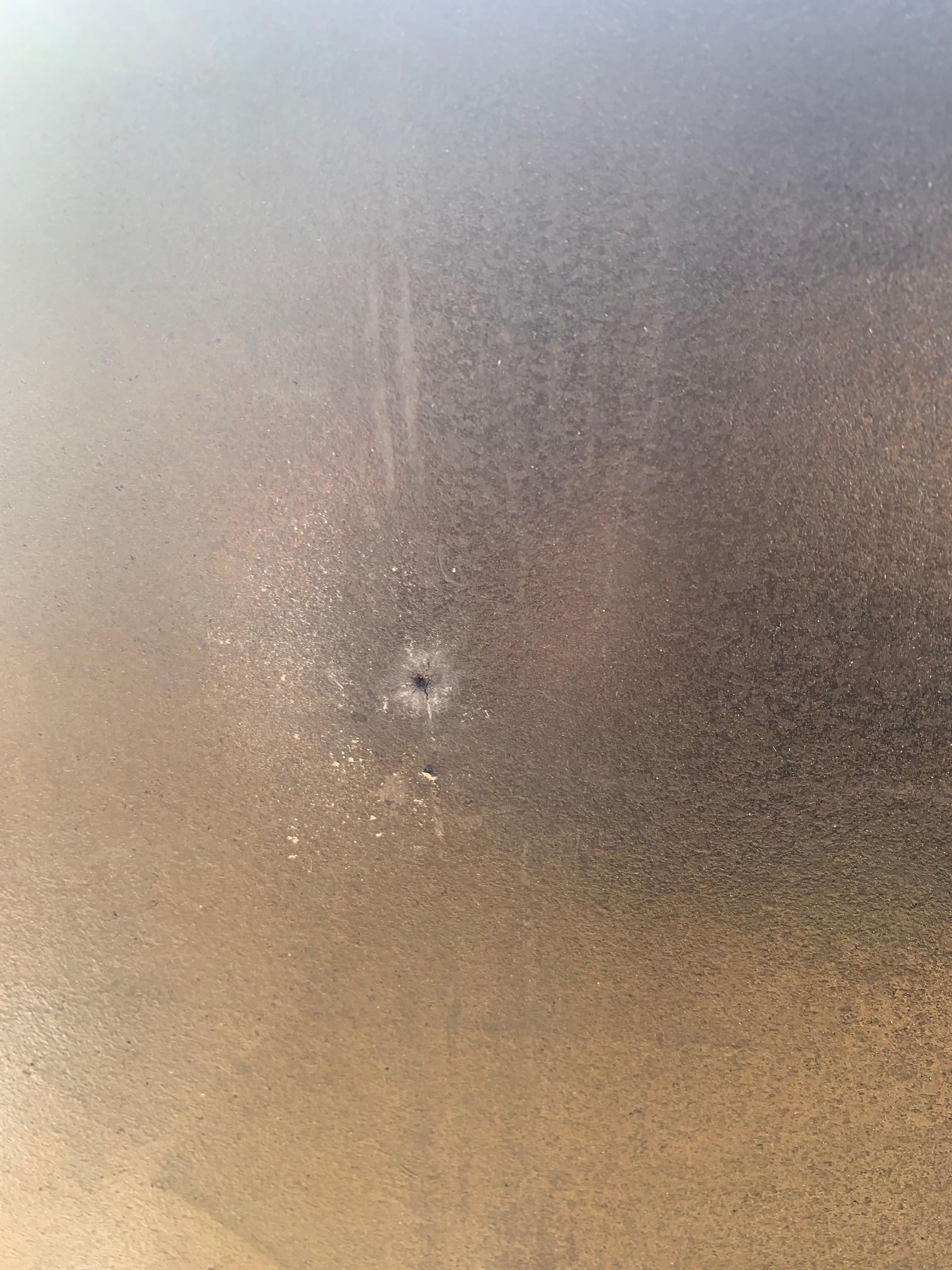
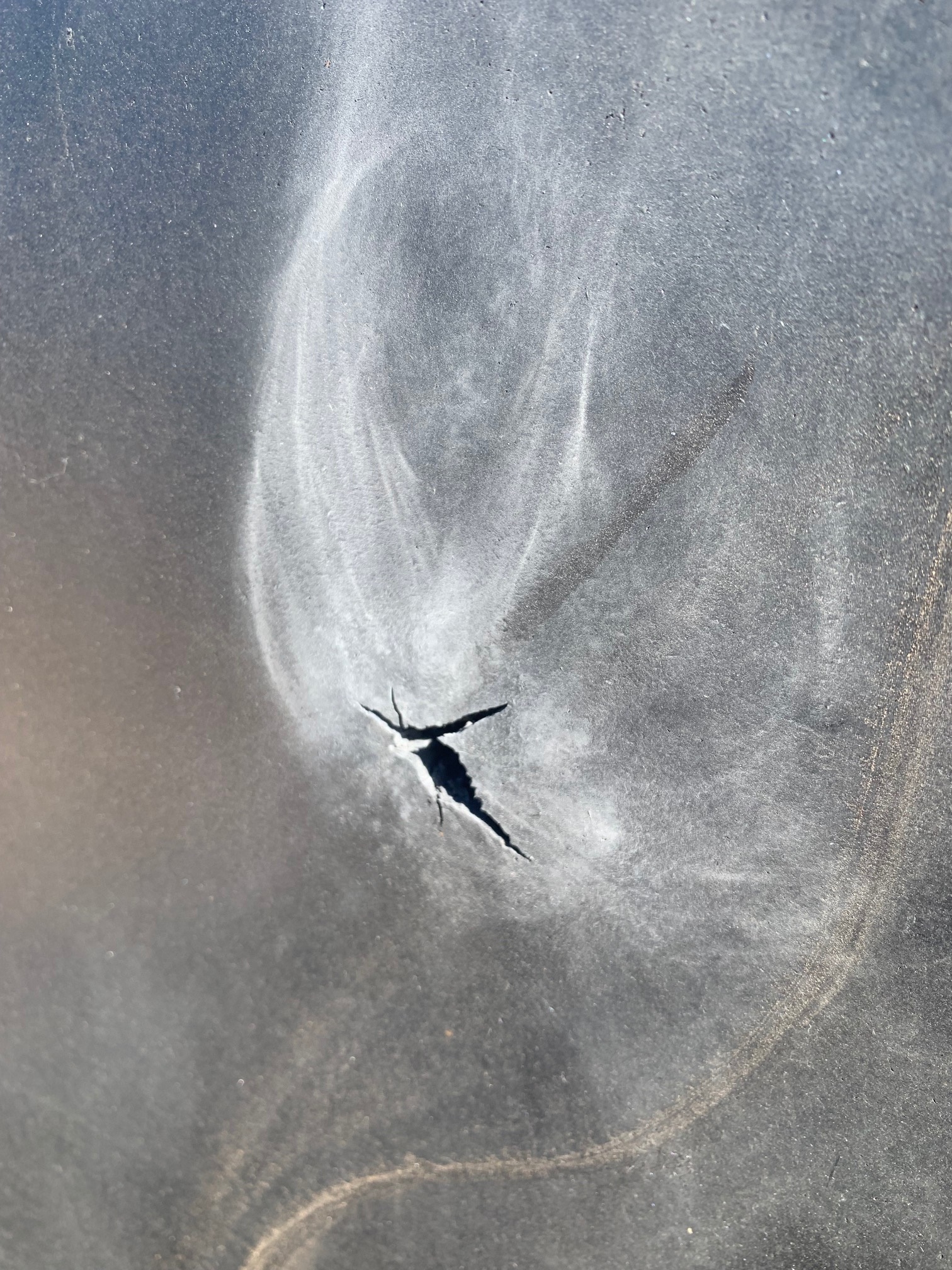
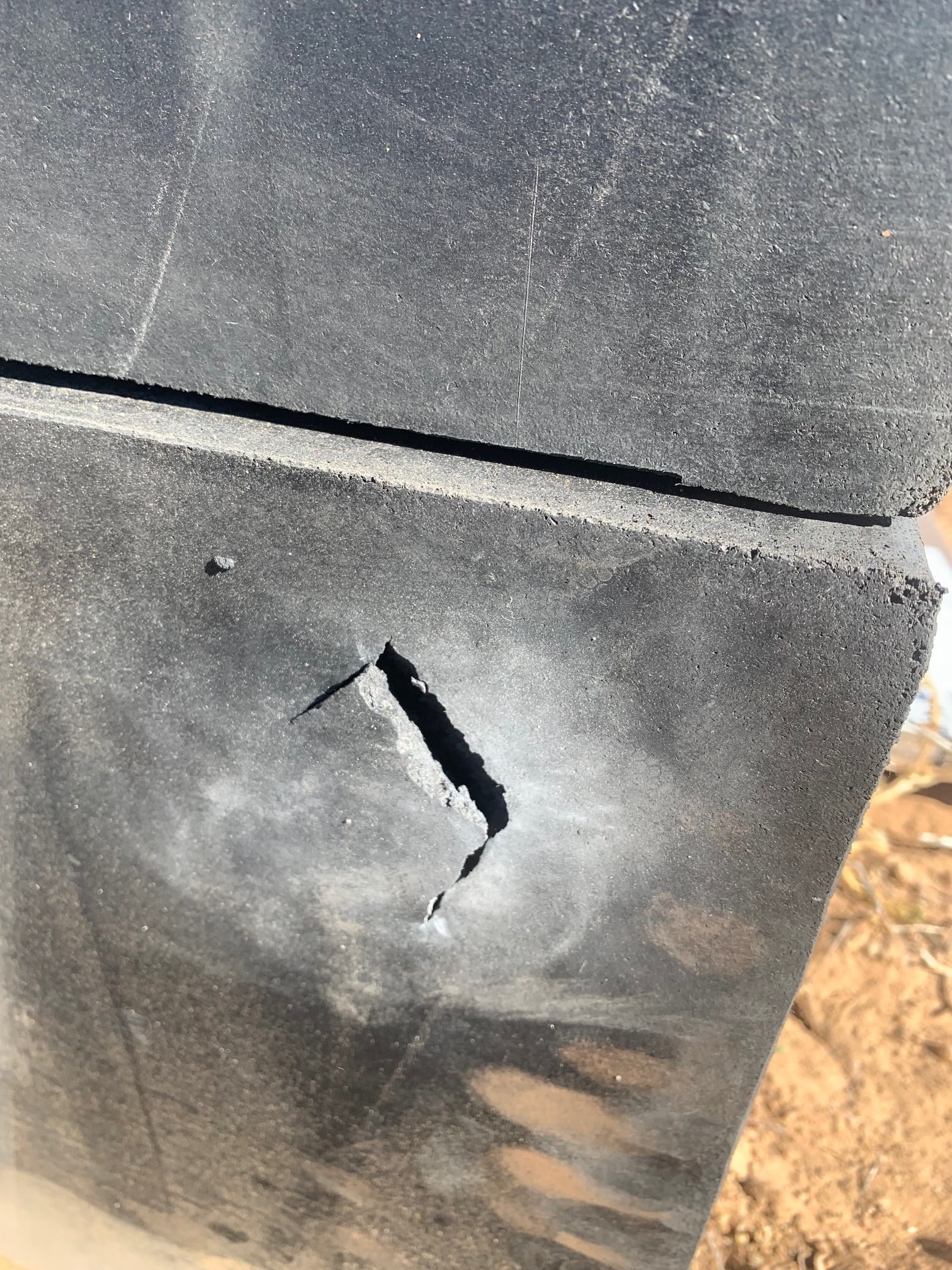
The .50 entry openings were localized, while the rear faces showed larger torn openings. Those photographs document damage, not a measured fragment-containment result. Interaction with the embedded screen is a possible explanation for deformation or fragmentation, but no internal inspection, recovered-fragment analysis or high-speed record establishes that mechanism. October impact velocity, exit velocity and remaining energy were not provided.
What the findings mean for AR500 backing and rubber longevity
When AR500 steel forms part of a range design, rubber may serve as the impact-facing component ahead of the containment structure. The July measurements support the potential for reduced projectile energy reaching downstream components in a comparable arrangement. They did not measure steel damage or service life, so extended AR500 life is not claimed as a demonstrated outcome of these tests.
CRS emphasizes material selection and product development for durability in demanding range applications. Useful service life depends on ammunition, shot distribution, firing volume, installation, accumulated damage and maintenance. These records contain no controlled competitor-longevity comparison, and no lifespan multiplier is assigned. The value of the testing is understanding how the selected components behave—not treating one stopping-depth observation as a complete range specification.
Ballistic rubber testing: common customer questions
What is CRS ballistic rubber rated for?
No NIJ protection rating is established by these customer tests. CRS ballistic rubber is a range-safety component intended to help mitigate ricochet and manage impact. Capture depends on the specific product, thickness, ammunition and installation; these results do not establish a universal caliber rating.
Does a forward exit mean the rubber failed?
Not by itself. The relevant question is whether the component and the complete system meet their assigned requirements. Rubber used as a facing layer may allow penetration toward an appropriate containment structure. A rubber-only capture application needs evidence of stopping performance for that configuration and threat.
Why do distance, angle and shot distribution matter?
Distance can affect impact velocity; angle changes the impact geometry; and repeated hits in a small area create different wear conditions from distributed shots. Ammunition construction, rubber thickness, backing and material condition also matter. The intended operating conditions should be reviewed with a qualified range designer or ballistic testing professional.
Read the full CRS ballistic rubber customer test report
The report includes all 14 October photographs, 22 photographs from the July source report, the original chronograph chart, readable shot-by-shot tables and distinctions between observations and possible explanations. Tester names and contact details are omitted. Documentation note: this historical test review concerns 2021 testing; the supporting report also references later order records for product-identification context. Those records are not additional ballistic tests or government certification.
Download the CRS Ballistic Rubber Customer Report (PDF, approximately 24 MB).
Discuss ballistic rubber for your range project
Explore ballistic rubber blocks, ballistic rubber panels and sheets and rolls, or request a quote for your application. Share your ammunition, expected impact conditions, dimensions, backing and firing pattern so the discussion starts with the actual project requirements.
For a separate screen-free stack test, see how .223 Remington behaved in stacked CRS ballistic rubber panels. Its observed stopping depth and illustrative calculations should not be combined with these different assemblies as a single dataset.

